Reference projects

Here is a small selection of our research projects.
Cancel
  • The photo shows a net-like fabric upon which two spools of yarn lie: a large spool with flax-fiber yarn, and a small spool with wire
    © Fraunhofer WKI | Manuela Lingnau

    How can road reconstructions be planned more economically and with fewer traffic disruptions? The point in time at which an asphalt road fails depends on the structural condition of the asphalt base layer. Inspections are currently only possible on a random basis via core analysis and cause additional damage to the road. In collaboration with research and industry partners, we are developing a solution: an intelligent measuring system that allows the condition of the asphalt base layer to be monitored continuously, comprehensively and non-destructively. The basis for the measuring system is a sensor fabric in the asphalt. At the Fraunhofer WKI, we are developing suitable fabric constructions on the basis of natural fibers as well as a process for the gentle integration of the electrically conductive sensor material into the fabric.

    more info
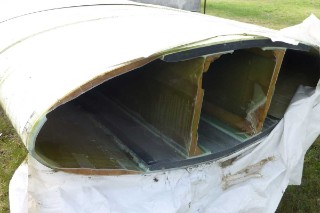
  • The photo shows the interior view of a roof truss with exposed, dark-brown wooden beams.
    © Fraunhofer WKI | Peter Meinlschmidt

    Every year, tons of waste wood accrue during the construction and demolition of buildings. A large proportion of this stems from structural timber components - for example roof trusses, ceiling beams or timber frameworks. At present, most of this high-quality waste wood is directly burned in order to generate energy. The aim of this joint project under the leadership of the Technische Universität Braunschweig is therefore to find a holistic, economical solution for the utilization of structural waste wood in the re-production of load-bearing timber-construction elements. At the Fraunhofer WKI, we are developing a portable analysis device for this purpose, which is intended to enable the minimally destructive in-situ examination of installed wood with regard to possible pollutant contamination - with a particular focus on wood preservatives. The project not only provides a contribution towards ensuring that more waste wood can be reused as a high-quality material in the future, but also supports the development of a sustainable, bio-based circular economy.

    more info
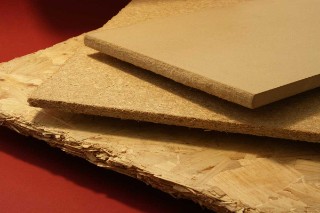
  • The photo shows two partially veneered pieces of particle board that look almost identical. Some of the wood chips on the upper board are slightly darker.
    © Fraunhofer WKI | Manuela Lingnau

    Re-using wood several times: Good for the climate, technically possible and economically interesting. However, products made from waste wood are difficult to market. The problem is that potential buyers need to understand the benefits of waste-wood products and be able to trust that waste wood has indeed been utilized. For this reason, we are, in collaboration with the Thünen Institute, developing scientifically based recommendations for action with regard to quality assurance and end-user awareness - for example with the help of certificates and quality seals. As waste wood is almost exclusively utilized materially in particle-board production, we are focusing on this material and the products made therefrom, in particular furniture. The aim is to increase the market share of products based on waste wood and, consequently, to provide a contribution towards both the efficient use of raw materials and climate protection.

    more info
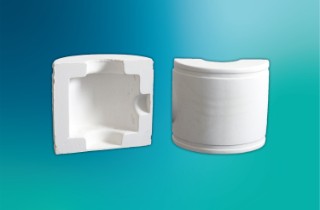
  • The photo shows a laboratory apparatus with a flask-shaped pressure vessel and, next to it, a measuring container filled with fine wood shavings.
    © Fraunhofer WKI | Manuela Lingnau

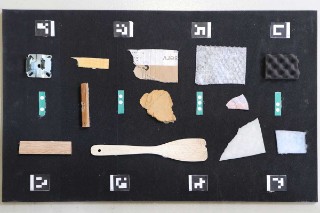
    Around 8 to 10 million metric tonnes of waste wood accrue in Germany every year. A good 80 percent of this is used directly for energy, i.e. incinerated. In order to make more efficient use of wood as a resource, it is necessary for significantly more waste wood to be materially re-used (material recycling). One obstacle is the fact that up to now, considerable effort has been required in order to determine possible contamination. A significant simplification is being developed within a project led by the University of Greifswald in collaboration with the Fraunhofer WKI and industrial companies: the optimization of “X-ray fluorescence analysis (XRF)” for the sample type waste wood. The new analysis method should be quick and easy to use for all parties involved in the waste-wood value chain – for example recycling companies, wood-based material manufacturers and authorities.

    more info
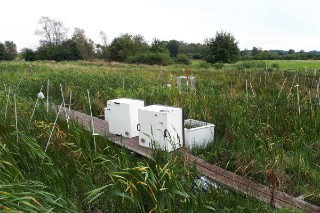
  • The photo shows an area of fenland with a large number of Typha plants and white harvesting boxes on a wooden walkway.
    © 3N Kompetenzzentrum

    Protecting moorlands, avoiding greenhouse-gas emissions and, at the same time, extracting valuable raw materials for house construction and horticulture: That is the aim of this model and demonstration project, which is being implemented in two model regions in the districts of Emsland and Cuxhaven by a total of 13 partners from research and industry. The task of the Fraunhofer WKI is to thereby develop, manufacture and test construction products on the basis of cattails in close collaboration with the Fraunhofer IBP.

    more info
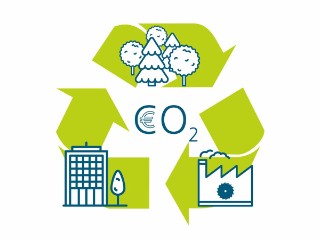
  • The graphical reference diagram shows the three stations forest, factory, building as part of a cycle. The representation of the cycle corresponds to the generally used recycling symbol. »CO2« and the euro symbol are in the middle of the cycle.
    © Fraunhofer WKI | Manuela Lingnau

    Houses made of wood are good for the climate and conserve finite resources such as concrete or steel. In particular, the construction of multi-story buildings and entire city quarters in timber construction offers great potential for achieving climate protection targets and strengthening the construction industry with a view to the future. By international standards, however, timber construction in Germany is still in its infancy. We want to change that. Together with project partners, we are investigating and optimizing the networking and cooperation of the players along the »urban timber construction« value chain, using the Berlin-Brandenburg region as an example. In this project, we at the Fraunhofer WKI are investigating the regionally available pine-wood product range in order to produce high-quality timber construction elements from it. The aim is to support metropolitan regions on their way to climate neutrality and to make the German construction industry fit for the future – based on renewable raw materials and closed, efficient resource cycles

    more info
  • The photo shows sample pieces of three different wood-based materials (OSB, particle board and MDF).
    © Fraunhofer WKI | Manuela Lingnau

    Climate change presents major challenges for the German forestry and timber industries. Extreme weather events and the mass reproduction of insect pests have caused enormous damage to the forests. In particular, spruce trees have fallen victim en masse to droughts, storms and bark beetles. The majority of the damaged or dead spruce trees cannot be harvested promptly. Some of them remain standing and lying for several years. Is the wood quality then still sufficient for the production of durable construction products or wood-based materials? Within the framework of this project, we are investigating this question in collaboration with partners from research and industry. With the creation of a guideline, we also intend to provide specific recommendations for action for forest owners and the timber industry.

    more info
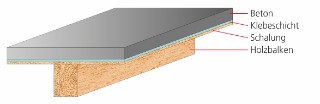
  • Die Computergrafik zeigt einen Holzbalken. Auf der Oberseite des Balkens liegt eine Platte, die sich aus drei Schichten zusammensetzt (von unten nach oben): Holzschalung, Klebschicht, Beton.
    © Fraunhofer WKI | Christoph Pöhler

    Resource conservation and energy efficiency determine the future of construction. Wood is an environmentally friendly and versatile building material. In addition to its ecological assessment, it also offers some technical advantages. Innovative timber-hybrid systems have even better mechanical properties, higher durability and allow for slender structures. Therefore, they are not only more resource efficient but also expand the architectural scope. In this project, we investigate and optimize the long-term behavior of wood hybrid systems, thereby laying the foundation for their use in the construction industry. Our main goal is to significantly increase the use of wood in building construction.

    more info
  • The photo shows an office with three computer workstations, each with one person sitting and working. Corona viruses are "floating" in the air (graphic visualization).
    © Shutterstock / Fraunhofer WKI

    The Corona pandemic has demonstrated the importance of protecting people against infection through airborne pathogens in indoor environments. Air-purification systems can significantly contribute towards this. Currently, however, there is no uniform procedure for testing their effectiveness. We are developing a possible test standard in order to close this gap. In the future, this should facilitate the health evaluation of workplaces with regard to viruses and other airborne pathogens.

    more info
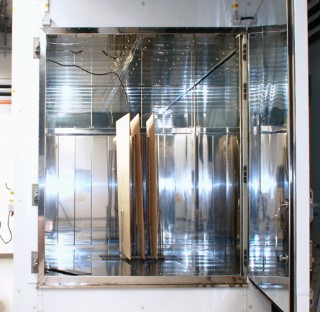
  • The photo shows a chamber that is approximately 3 meters wide, 4 meters deep and 3 meters high, lined on the inside with stainless steel. Through the open chamber door, a framework can be seen in the interior with three vertically positioned wood-based panels.
    © Fraunhofer WKI | Manuela Lingnau

    In modern industrial societies, people spend the majority of the day inside buildings. The air quality in indoor spaces is therefore a decisive factor for health and well-being. Foreign substances and odors can have a negative influence on the air quality. One ever-present potential source is construction products. Despite the existence of testing and evaluation schemes for construction-product emissions, unpleasant odors can still be generated in real indoor environments, or guideline values can be exceeded. In this project, we are investigating the relationship between construction-product emissions and the air quality in realistic model rooms and are developing simulation models. The results of the project will be incorporated into a practical guide. This should provide planning and architectural offices with recommendations regarding the selection and utilization of building materials.

    more info